Hex Bolt Surface Treatment Trends Highlight Key Finishing Options for 2026
Just another WordPress site
Press Release Disclaimer: This is a press release distributed through the XPR Media network. It has not been independently verified by our newsroom.
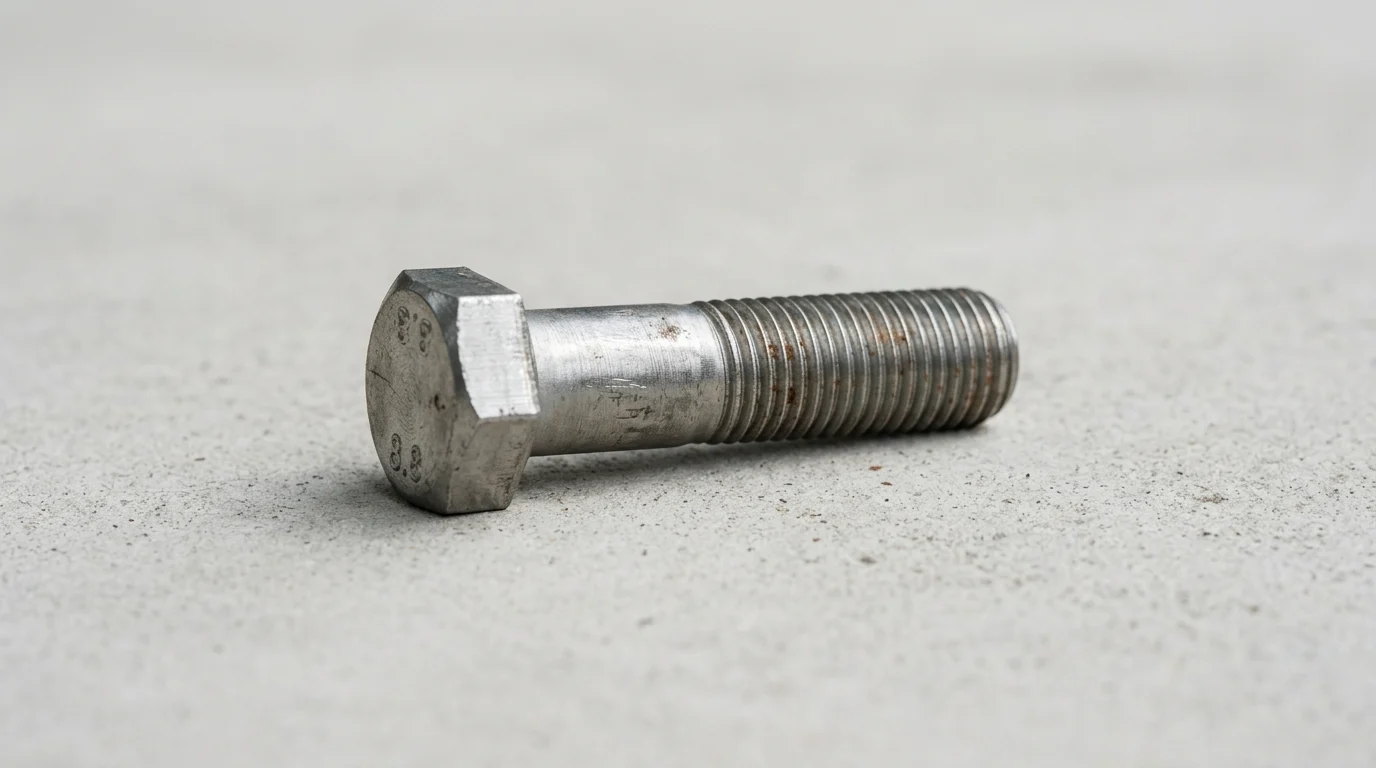

Ningbo City,Zhejiang province ,China-September 20, 2026
David DaisalesNingbo Zhongli Bolts Manufacturing Co., Ltd. founded in 2003, is a professional manufacturer of high-strength fasteners in different specifications for various models, which is covering an area of about 10,000 square meters, registered capital of 1500,000 RMB, with the total annual productivity of 8,000 tons per year. The company has set up several sales branches in different provinces in China. Meanwhile, the company’s products are exported to Europe, USA, Middle East, Africa, Southeast Asia and other regions.
A hex bolt finish is no longer just a cosmetic choice—it is a frontline engineering decision that affects safety, maintenance intervals, and total ownership cost. By 2026, manufacturers are expected to balance corrosion performance, environmental compliance, and traceable quality control across tougher operating conditions, from offshore wind assets to chemical processing plants. This guide explains how to evaluate exposure categories, compare plating, coating, and conversion treatments, and decide when higher-performance materials such as stainless or duplex steel make more sense than coated carbon steel. The goal is practical: specify the right surface treatment before corrosion turns a low-cost fastener into an expensive field failure.
How to Build a 2026 Hex Bolt Surface Treatment Strategy
As industrial environments become increasingly demanding, engineering a robust surface treatment strategy for structural and mechanical fasteners is critical. By 2026, global manufacturers are shifting their focus away from simple aesthetic considerations toward advanced corrosion resistance, stringent environmental compliance, and long-term lifecycle reliability—driven by emerging trends such as AI-driven coating inspection, novel sustainable chemistries, and digital-twin integration. Establishing a comprehensive strategy requires understanding the precise chemical and mechanical interactions between the fastener’s base material, its specific geometry, and its operating environment.
A well-defined surface treatment protocol not only ensures structural integrity but also streamlines maintenance schedules across diverse industrial sectors. From renewable energy installations to heavy automotive manufacturing, the protective finish applied to threaded components acts as the primary defense against atmospheric, chemical, and galvanic degradation.
Why surface treatment affects total cost
The total cost of ownership (TCO) for industrial fasteners extends far beyond the initial procurement price per unit. While an untreated or minimally treated carbon steel bolt might cost a fraction of a cent less upfront, premature failure due to environmental corrosion can lead to catastrophic system downtime and immense replacement expenses.
General industrial maintenance benchmarks indicate that the cost to replace a severely rusted or seized fastener in the field significantly exceeds the original component cost. This exponential increase factors in specialized maintenance labor, heavy equipment downtime, localized structural repairs, and potential safety hazards. Consequently, investing a premium on a high-performance surface treatment during the initial design phase frequently yields a substantial return on investment by preventing mid-lifecycle field failures and operational bottlenecks.
Key corrosion risks and service environments
Fasteners are continuously exposed to diverse environmental challenges, which are typically categorized by international atmospheric corrosivity standards ranging from C1 (very low corrosivity, such as heated indoor spaces) to C5-M (very high marine corrosivity). Identifying the specific service environment is the most critical step in formulating a treatment strategy.
In offshore wind turbine applications or coastal infrastructure (C5-M environments, as classified by ISO 9223), atmospheric salt deposition creates severe marine exposure—conditions that are monitored and classified by measurement standards such as ISO 9225. This aggressive chloride exposure rapidly accelerates galvanic corrosion and chloride-induced pitting. For these severe C5-M environments, specifying alternative base materials like stainless or duplex steel often serves as a highly effective alternative to coating carbon steel. Conversely, fasteners utilized in chemical processing plants may face highly acidic or alkaline atmospheres that require specialized fluoropolymer coatings rather than standard zinc-based solutions. Quantifying these risks through environmental audits ensures that the specified coating thickness and chemical composition are adequate for the projected operational lifespan.
Coating vs. plating vs. conversion treatment
Understanding the fundamental metallurgical and application distinctions between coatings, platings, and conversion treatments is foundational for mechanical engineers and procurement specialists. Electroplating relies on an electrical current to deposit a thin, uniform metallic layer—typically ranging from 3 to 12 micrometers (µm) in thickness—onto the substrate. Engineers must account for current density variations during this process, which naturally cause thicker plating buildup on the sharp corners of a hex head compared to its flat flats.
In contrast, hot-dip galvanizing (a specific type of coating process) involves submerging the fastener in a bath of molten zinc at approximately 450°C. This creates a highly durable, thick metallurgical bond that typically ranges from 45 µm to 65 µm in thickness, providing superior sacrificial protection at the cost of dimensional precision. Conversion treatments, such as zinc phosphating or traditional black oxide, do not deposit new material but rather alter the surface chemistry of the steel to a shallow depth of less than 5 µm. While conversion treatments provide minimal standalone corrosion resistance, they serve as exceptional porous primers for secondary rust-preventative oils, waxes, or organic paints. Additionally, specialized processes like mechanical galvanizing (which cold-welds zinc powder to the fastener using glass beads) and duplex systems (which apply paint over a galvanized layer) offer alternative pathways for achieving robust, multi-layer protection in demanding environments.
Key Hex Bolt Surface Treatments to Compare
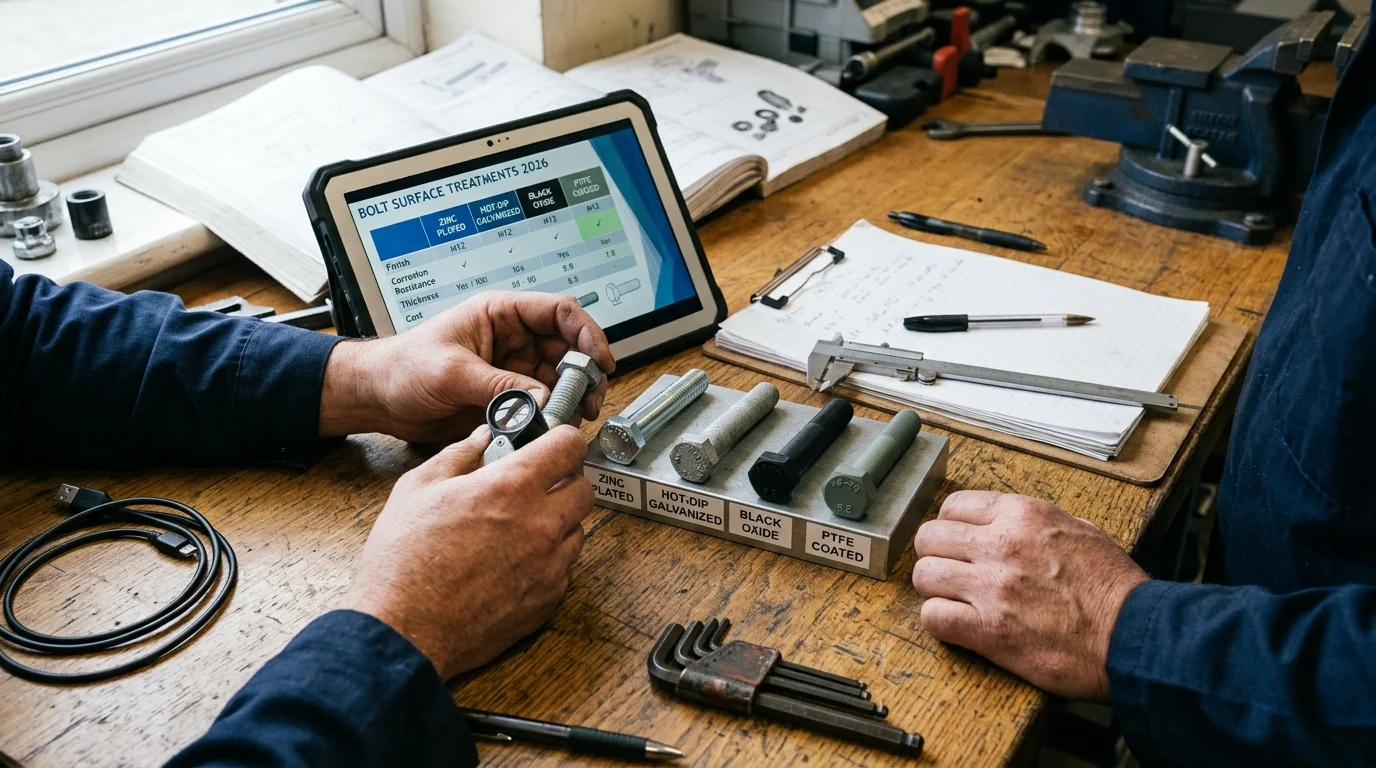
Evaluating the primary protective finishes available for hex-bolts requires balancing targeted corrosion resistance, mechanical thread compatibility, and overall budget constraints. The 2026 manufacturing landscape is dominated by three major zinc-based technologies, each offering distinct advantages depending on the application’s tensile requirements and environmental severity.
Comparing these treatments side-by-side allows engineering teams to optimize both the bill of materials and the long-term reliability of the assembled structure.
Zinc electroplating, hot-dip galvanizing, and zinc flake
Zinc electroplating remains the most universally applied and economically viable choice for indoor assemblies, automotive interiors, and mildly corrosive outdoor environments. It provides a bright, aesthetically pleasing finish with excellent thickness uniformity across complex geometries. However, its relatively thin barrier limits its use in severe weather conditions.
Hot-dip galvanizing (HDG) is the long-established structural practice for outdoor steelwork, bridges, and power transmission towers. By creating a zinc-iron alloy layer, HDG offers unmatched abrasion resistance and robust sacrificial protection. During the HDG process, careful attention must be paid to venting and drainage to prevent molten zinc from pooling under the hex head or clogging the threads. Zinc flake coatings represent the modern alternative. Applied via a dip-spin and baking process rather than electrolysis, zinc flake coatings provide exceptional barrier protection and have seen widespread automotive adoption over the past decade. Buyers should note that legacy zinc flake formulations historically contained hexavalent chromium, making it critical to verify that the specific product specified utilizes modern Cr6+-free topcoat chemistries to align with current environmental compliance standards.
Coating thickness, salt spray performance, and appearance
Performance metrics vary significantly across these three primary treatment categories, directly impacting their suitability for specific engineering applications. As detailed in the comparison table below, neutral salt spray (NSS) resistance and typical coating thicknesses differ vastly between standard electroplating, heavy hot-dip galvanizing, and advanced multi-layer zinc flake systems.
| Surface Treatment | Typical Thickness (µm) | Salt Spray to Red Rust (Hours) | Visual Appearance |
|---|---|---|---|
| Zinc Electroplating (Clear/Blue) | 5 – 12 | 96 – 120 | Bright, reflective silver |
| Hot-Dip Galvanizing (HDG) | 45 – 65 | 500 – 800 | Dull, matte grey, slightly rough |
| Zinc Flake Coating | 8 – 15 | 720 – 1000+ | Satin metallic silver/grey |
The appearance also dictates usage; while electroplating is favored for consumer-facing goods due to its bright finish, the dull, utilitarian matte grey of HDG is perfectly acceptable for hidden structural joints. It is crucial to note, however, that neutral salt spray (NSS) hours are an accelerated laboratory benchmark highly dependent on the use of specific topcoat sealers and coating thickness. They serve as a comparative quality control metric tied to specific standards rather than a direct equivalent to actual field lifespan, as real-world environments introduce variables like UV exposure, fluctuating humidity, and mechanical abrasion.
Material grade, thread tolerance, and nut compatibility
Surface treatments physically alter the dimensions of the fastener, demanding careful attention to thread tolerances and mating nut compatibility. A standard M12 thread with a 6g tolerance class will comfortably accommodate the 5 to 12 µm thickness of standard zinc electroplating without binding during assembly.
However, the heavy 45 to 65 µm build-up characteristic of hot-dip galvanizing requires significant dimensional compensation. To prevent thread galling or seizure, the mating nut must be overtapped—typically by +0.35mm to +0.40mm for an M12 thread. Furthermore, hot-dip galvanizing is generally unsuitable for Property Class 10.9 and 12.9 fasteners. Beyond thread tolerance issues, the approximately 450°C bath can temper high-strength steel and dangerously reduce its mechanical properties. Thick finishes like HDG also risk obscuring critical property-class and manufacturer markings forged into the hex head, which are required for traceability.
High-strength steel fasteners are also highly susceptible to hydrogen embrittlement during electrolytic plating and acid pickling processes. For these high-stress components, non-electrolytic zinc flake coatings are increasingly specified to eliminate the risk of delayed brittle fracture, though mechanical plating and carefully baked electrolytic zinc remain in use under strictly controlled conditions.
Beyond dimensional tolerances, surface treatments drastically alter the fastener’s friction coefficient (K-factor). Because the K-factor directly determines the torque-tension relationship during assembly, engineers must adjust torque specifications based on the specific coating applied. Failing to account for the lubricity of a zinc flake coating or a specialized topcoat can result in dangerous over-tensioning and bolt yielding, even if the thread tolerances are perfectly matched.
Hex Bolt Specifications and Compliance Requirements
Compliance with international engineering standards and environmental directives ensures that fasteners meet rigorous safety, ecological, and performance benchmarks. As global supply chains become more integrated, specifying the correct standard is vital to ensure cross-border compatibility and legal compliance.
In 2026, regulatory scrutiny regarding chemical substances used in metal finishing is tighter than ever, requiring procurement teams to maintain strict documentation and traceability for all treated components.
Relevant ASTM, ISO, and DIN standards
Fastener surface treatments are governed by a complex matrix of international standards that dictate minimum thickness, adhesion, and testing methodologies. For metric components, ISO 4042 is the definitive standard outlining the dimensional and testing requirements for electroplated fasteners. It ensures that the accumulated coating thickness does not compromise the basic profile of the ISO metric thread.
For heavy outdoor infrastructure, ISO 10684 dictates the specifications for hot-dip galvanized threads, detailing the specific overtapping allowances required for compatible nuts. In the North American market, engineers frequently rely on ASTM equivalents; ASTM F1941 serves as the standard specification for electrodeposited coatings on threaded fasteners, while ASTM F2329 provides the equivalent guidelines for hot-dip galvanizing. Adhering strictly to these published standards prevents ambiguous specifications and guarantees a baseline level of metallurgical performance.
RoHS, REACH, and hexavalent chromium restrictions
The regulatory landscape strictly enforces the elimination of highly toxic and carcinogenic substances from manufacturing processes. Under the European Union’s Restriction of Hazardous Substances (RoHS) directive, the maximum allowable concentration for hexavalent chromium (Cr6+) is legally capped at 0.1% by weight (1000 parts per million) in homogeneous materials specifically for electrical and electronic equipment. Concurrently, the Registration, Evaluation, Authorisation and Restriction of Chemicals (REACH) framework and automotive End-of-Life Vehicles (ELV) directives drive the broader mechanical fastener industry shift by mandating SVHC (Substances of Very High Concern) notifications and enforcing strict restrictions across all manufactured articles.
Consequently, the global fastener industry has almost universally transitioned to trivalent chromium (Cr3+) passivates and completely chromium-free zinc flake technologies. Modern Cr3+ formulations can approach or meet the historical corrosion resistance benchmarks previously achieved by the banned Cr6+ yellow iridescent finishes, though this performance is highly dependent on the application of high-quality topcoat sealers.
Documentation buyers should request
Rigorous procurement protocols require comprehensive documentation to verify that surface treatments meet both engineering specifications and environmental laws. For critical applications in the automotive, aerospace, or heavy machinery sectors, buyers should mandate Level 3 Production Part Approval Process (PPAP) submissions from their suppliers, increasingly managed through digital PPAP integration platforms that ensure batch traceability.
For general industrial and structural use, EN 10204 Type 3.1 inspection certificates are essential. A 3.1 certificate provides documented proof, validated by the manufacturer’s independent quality department, that the chemical composition, coating thickness, and mechanical properties of the specific production batch meet the stated normative requirements. Maintaining this documentation is critical for ISO 9001 compliance and provides vital traceability in the event of a structural failure or warranty investigation.
How to Control Hex Bolt Surface Treatment Quality
Consistent surface treatment quality is achieved through rigorous process control, monitoring every variable from the initial chemical cleaning baths to the final non-destructive inspection. A minor deviation in bath temperature, pH level, or curing time can drastically compromise the protective capabilities of the final finish.
Establishing a reliable quality assurance framework ensures that the theoretical benefits of a chosen surface treatment are actually realized on the assembly line and in the field.
Cleaning, pretreatment, coating, and curing steps
The preparation and application processes dictate the ultimate durability and safety of the finish. Proper substrate preparation requires the complete removal of cutting oils, scale, and oxides. For high-strength steel (Property Class 10.9 and above), mechanical descaling or alkaline cleaning is heavily preferred over traditional acid pickling to minimize the introduction of atomic hydrogen into the steel matrix.
Following the electroplating process, a critical curing or “baking” step is mandatory for these high-strength components. To mitigate hydrogen embrittlement, the plated fasteners must be baked in continuous ovens at temperatures ranging from 200°C to 220°C for a minimum of 4 to 8 hours. Crucially, these baking parameters are highly process-dependent and may be insufficient for Property Class 12.9 fasteners or specific plating chemistries without rigorous supplier validation. This baking process must be initiated promptly after the plating operation to facilitate hydrogen outgassing before the atomic hydrogen can migrate to areas of high stress concentration and cause delayed brittle fracture.
Coating thickness, adhesion, and corrosion testing
Finished fasteners must undergo stringent, standardized testing protocols to validate their physical properties. Coating thickness is routinely verified using non-destructive X-ray fluorescence (XRF) or magnetic induction equipment, ensuring adherence to the specified micron ranges (e.g., verifying a minimum of 8 µm for a severe-service electroplated bolt).
Adhesion integrity is evaluated via cross-hatch testing or thermal shock procedures, which ensure the coating will not flake or peel under mechanical torque. Overall corrosion resistance is universally benchmarked using the neutral salt spray (NSS) test according to ASTM B117 or ISO 9227. During this accelerated test, components are exposed to a continuous 5% sodium chloride fog at 35°C. Quality inspectors monitor the hours elapsed until the first appearance of white rust (indicating the breakdown of the zinc sacrificial layer) and red rust (indicating total failure and oxidation of the underlying steel substrate).
Supplier capability and process control checks
Evaluating a supplier’s internal quality management system is just as important as testing the final physical product. Buyers should audit potential surface treatment partners for the active implementation of Statistical Process Control (SPC).
A robust, automated plating line should consistently demonstrate a Process Capability Index (Cpk) of greater than 1.33 for critical parameters such as bath chemical concentration, current density, and final coating thickness. Furthermore, top-tier suppliers utilize AI-driven optical sorting machines equipped with high-speed cameras and laser micrometers. These digital-twin integrated systems inspect 100% of the production run for thread damage, coating pooling, and dimensional accuracy, successfully maintaining defect rates below industry-standard benchmarks and ensuring that out-of-spec fasteners never reach the end-user’s assembly line.
How to Choose the Best Hex Bolt Surface Treatment
Selecting the optimal surface finish requires a strategic, data-driven balance between environmental demands, mechanical constraints, and economic realities. By 2026, engineers are no longer relying on generic “zinc plated” callouts, but rather utilizing sophisticated selection matrices to match the exact coating chemistry to the anticipated lifecycle stresses.
Finalizing the specification involves translating these engineering requirements into precise procurement language that leaves no room for supplier misinterpretation.
Decision matrix by application and environment
A structured decision matrix helps streamline the selection process, allowing engineering and purchasing teams to align on the best technical and commercial fit for a given project by separating environmental severity from mechanical stress.
| Environment / Stress Category | Recommended Treatment | High-Strength (≥10.9) Compatibility | Key Limitation |
|---|---|---|---|
| C1-C2 (Indoor) / Low Stress | Zinc Electroplating (Cr3+ Clear) | Requires strict baking validation | Poor outdoor longevity ( |
| C3-C4 (Outdoor) / High Stress | Zinc Flake Coating | Excellent (Non-electrolytic) | Susceptible to heavy abrasion |
| C3-C4 (Outdoor) / Structural | Hot-Dip Galvanizing (HDG) | Excluded (Tempering risk) | Requires overtapped nuts; rough finish |
| C4 (Outdoor) / Thread-Sensitive | Mechanical Galvanizing | Good | Lower abrasion resistance than HDG |
| C5-M (Marine) / Severe Stress | Duplex System or Zn-Ni | Zn-Ni preferred; HDG excluded | Highest initial unit cost and thickness |
By mapping the environmental corrosivity against mechanical stress and high-strength compatibility, organizations can standardize their fastener bills of materials, reducing unnecessary inventory complexity while ensuring adequate field performance. Mechanical galvanizing and duplex systems (paint-over-galvanizing) serve as excellent alternatives for outdoor fasteners where HDG thread tolerances are problematic or where C5-M service life demands multi-layer protection.
Lifecycle cost vs. unit price
Advanced lifecycle cost analysis evaluates the specific metallurgical benefits of premium coatings against their initial unit price, rather than just looking at generic replacement labor. For instance, zinc-nickel electroplating—which co-deposits zinc with a 12% to 15% nickel content—carries a notable unit price premium over standard zinc plating.
However, this alloy provides extraordinary thermodynamic stability, routinely delivering over 1000 hours of salt spray resistance and actively mitigating galvanic corrosion when mated with aluminum components. Galvanic compatibility is a critical consideration; for example, when standard zinc-coated steel contacts aluminum or stainless steel substrates in a wet environment, the zinc acts as an anode and rapidly corrodes. Specifying alloyed platings like zinc-nickel, or utilizing isolating washers, prevents this accelerated degradation in mixed-metal assemblies. In the context of heavy machinery, agricultural equipment, or aerospace assemblies, investing a marginal upfront premium per fastener leverages these advanced metallurgical variables to protect the broader assembly over a long operational lifespan. The lifecycle model overwhelmingly favors high-performance coatings in any application where galvanic risks are high or maintenance access is difficult.
Final specification guidance for durable performance
Finalizing the engineering specification requires absolute precision on the manufacturing drawing and the subsequent purchase order. Ambiguous callouts are a primary source of supply chain failure and premature corrosion.
A robust, 2026-compliant specification must detail the base material grade (e.g., Property Class 8.8 or 10.9), the exact finish standard and designation (e.g., ISO 4042 Zn8/A/T2 for 8 µm zinc with a clear trivalent passivate and a sealant topcoat), the minimum required salt spray hours to red rust, the specific thread tolerance class required prior to coating (such as 6g), and the target friction coefficient (K-factor) for safe assembly.
Key Takeaways
- Evaluate the hex bolt service environment first, using corrosivity categories such as ISO 9223 C1 to C5-M before selecting any finish.
- Treat surface finishing as a lifecycle cost decision because replacing a seized or rusted bolt in the field can cost far more than the original fastener.
- For severe marine C5-M exposure, consider stainless or duplex steel instead of relying only on coated carbon steel.
- Use specialized fluoropolymer or chemical-resistant coatings when hex bolts will operate in acidic, alkaline, or chemical processing environments.
- Remember that electroplating typically deposits a thin metallic layer of about 3 to 12 µm, so confirm whether that thickness fits the corrosion risk.
Frequently Asked QuestionsWhy does hex bolt surface treatment matter for total cost?
A low-cost untreated bolt can become expensive if corrosion causes seizure, downtime, repairs, or safety risks. Selecting the right finish during design usually lowers lifecycle cost by reducing field failures and maintenance interruptions.
How should I choose a surface treatment for a hex bolt?
Start with the service environment, base material, and required lifespan. Match the finish to corrosion exposure, chemical contact, galvanic risk, coating thickness needs, and relevant standards such as ISO 9223 for atmospheric corrosivity.
What does C5-M mean for hex bolt selection?
C5-M indicates very high marine corrosivity under ISO 9223. In offshore or coastal environments, chloride exposure can accelerate pitting and galvanic corrosion, so stainless or duplex steel may be more reliable than coated carbon steel.
Is zinc plating enough for harsh industrial environments?
Not always. Standard zinc-based finishes may suit lower-risk environments, but chemical plants, marine exposure, or high-corrosion zones often require thicker systems, specialized coatings, or alternative alloys.
What is the difference between plating and coating?
Electroplating deposits a thin metallic layer using electrical current, often around 3–12 µm. Coatings are typically applied as protective layers with different chemistries, while conversion treatments chemically modify the surface to improve protection or adhesion.
About US
Ningbo Zhongli Bolts Manufacturing Co., Ltd. founded in 2003, is a professional manufacturer of high-strength fasteners in different specifications for various models, which is covering an area of about 10,000 square meters, registered capital of 1500,000 RMB, with the total annual productivity of 8,000 tons per year. The company has set up several sales branches in different provinces in China. Meanwhile, the company’s products are exported to Europe, USA, Middle East, Africa, Southeast Asia and other regions.
Media Contact
Company Name: Ningbo Zhongli bolts manufacturing Co., Ltd.
Contact Person: Media Relations
Email: Send Email
Phone: +86-574-86587617, +8615257861940
Address:Tiangu Industrial Zone,Jiulonghu Region,Zhenhai District, Ningbo City,Zhejiang province ,China
Country: China
Website: https://www.cnzyl.com/
Press Release Distributed by ABNewswire.com
To view the original version on ABNewswire visit: Hex Bolt Surface Treatment Trends Highlight Key Finishing Options for 2026